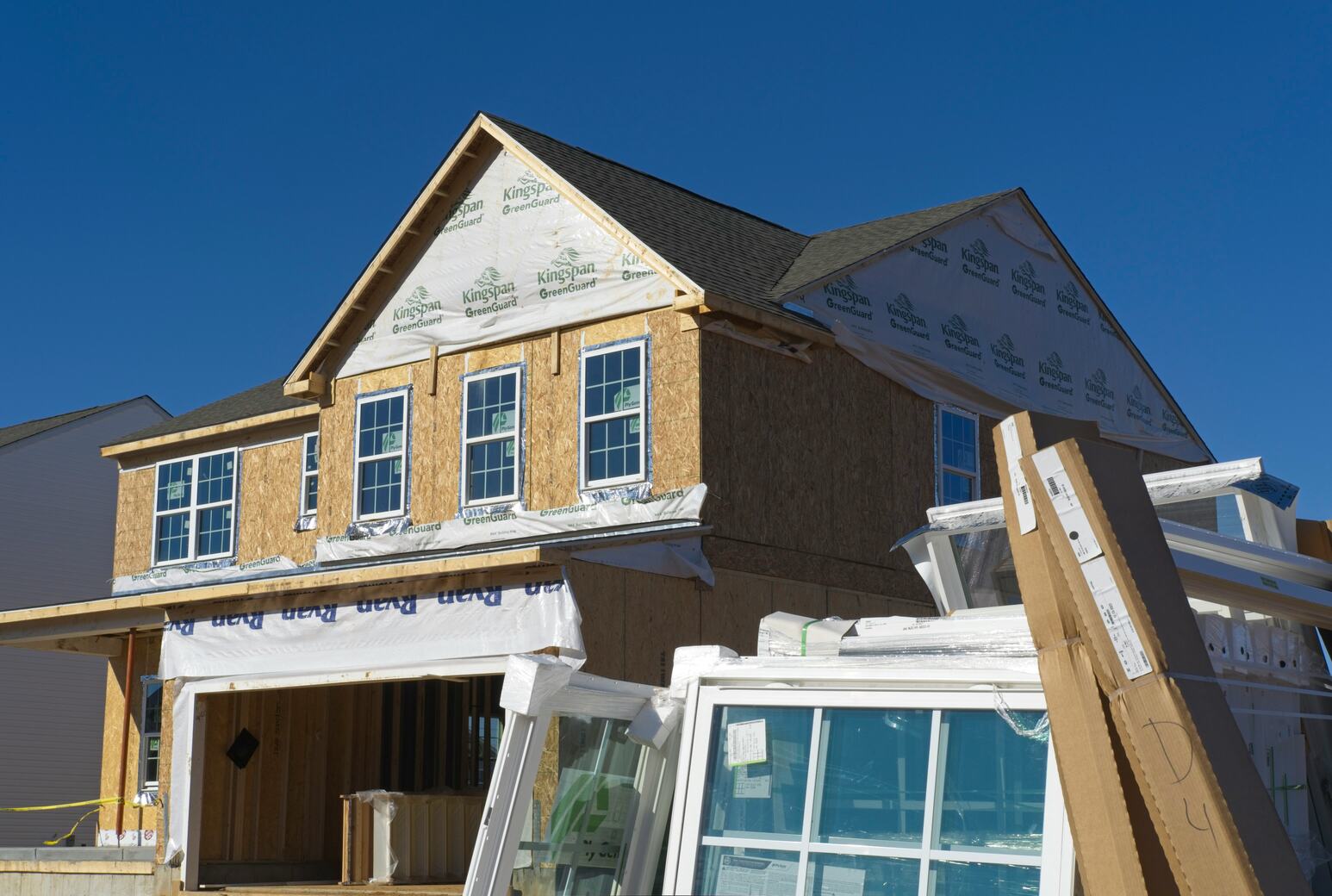
To vet a home improvement contractor in New Jersey, confirm the business is actively registered on the Division of Consumer Affairs Regulated Business portal, ask for a current liability insurance certificate and the security bond tier the business carries, and read the contract against the seven items state law requires. The lookup is free and takes about two minutes.
New Jersey registers home improvement contractors rather than licensing them today, though a licensing system is phasing in. Registration proves paperwork, not skill, and the difference matters more than most homeowner guides admit.
Does a contractor need a license in New Jersey?
New Jersey does not license home improvement contractors today. The state requires registration instead, under the Contractors' Business Registration Act, which obliges any home improvement contractor business to register with the New Jersey Division of Consumer Affairs before selling or performing home improvements on residential property in the state. Remodeling, painting, roofing, siding, paving, fencing, additions and repairs all fall inside that definition.
A licensing regime is arriving. New Jersey enacted P.L. 2023, c. 237 in January 2024, adding the Home Improvement and Home Elevation Contractor Licensing Act and creating a State Board of Home Improvement and Home Elevation Contractors. The new system replaces registration with genuine licensure, including an examination and an experience or apprenticeship requirement for new applicants. Contractors already in the system are largely grandfathered. Education and training requirements took effect on 1 February 2026, and the licensing requirement itself takes effect once the Board finalises its rules.
Check what the state is currently issuing before relying on any guide, including this one. The checks below hold either way, because registration remains in force through the transition and the same documents are involved.
Some trades carry their own licensing on top of this. Plumbing, electrical, and heating and cooling work are licensed through separate professional boards, and those licences are verified somewhere other than a contractor registration.
How do you check whether a contractor is registered in New Jersey?
Search the business name on the New Jersey Division of Consumer Affairs Regulated Business portal public lookup. The search is free, returns in about two minutes, and works from a phone. Confirm the registration reads as active before signing anything rather than after. Registrations lapse when paperwork is not kept current, so check again if time has passed since the last look.
The portal sits at rgbportal.dca.njoag.gov/public-view/. If a plumber or electrician is doing the work, verify that trade licence separately through New Jersey's professional licensing verification system. The two are different systems, and a valid contractor registration says nothing about a trade licence.
Run this check before an emergency rather than during one. A burst water main or a failed heating system gives a homeowner no room to compare estimates, and the first contractor who answers the phone effectively has the job. Verifying a plumber, an electrician and a heating and cooling company while nothing is broken is the highest-return hour available on a house, and it converts an emergency call into a call to somebody already checked.
What insurance and bonding must a New Jersey contractor carry?
A registered home improvement contractor business must carry three things to obtain, renew or reinstate its registration. Commercial general liability insurance of at least $500,000 per occurrence. Workers' compensation insurance, unless legally exempt. And additional security, meaning a compliance bond, irrevocable letter of credit or equivalent, with a minimum principal sum set by the size of the work. Home elevation contractors face a higher liability minimum of $1,000,000.
The security tiers, per the Division of Consumer Affairs registration renewal notice dated 6 February 2025, run roughly as follows. $50,000 for a contract over $120,000, or where the business did at least $750,000 of work in the previous twelve months. $25,000 for a contract between $10,000 and $120,000, or $150,000 to $750,000 in the prior year. $10,000 below that. A contractor bidding a $60,000 kitchen should therefore be carrying $25,000 of security.
Asking which tier a business is bonded at is a fair question, because the tier is a legal requirement rather than a favour, and the answer indicates whether the registration is genuinely current. Ask for a certificate of insurance showing the policy number and the effective and expiration dates. A certificate that was valid at renewal is not proof that coverage is valid today.
Registration is a floor, not a verdict. Registration does not test skill, evaluate workmanship, or certify that anyone is good at their job. Registration means a business filed its paperwork, paid, insured itself and posted security.

What must a New Jersey home improvement contract contain?
Any New Jersey home improvement contract over $500 must be in writing, signed by all parties, and must contain seven specific elements under N.J.A.C. 13:45A-16.2. Changes to the terms must be in writing too. The $500 threshold catches a water heater replacement, not only an addition, which is why the requirement applies far more often than homeowners expect.
The contract must set out, in plain legible language:
- The contractor's legal name, business address and telephone number
- The contractor's registration number
- A specific description of the work and the principal products and materials to be used, which "general renovation" does not satisfy
- The total contract price
- Approximate start and completion dates
- A copy of the certificate of commercial general liability insurance, including the insurance company's telephone number
- Any warranty or guarantee, in writing
Two conspicuous notices are also required: the three-day right to cancel, and a notice about the Contractors' Registration Act carrying the Division of Consumer Affairs toll-free number.
A missing element is not a technicality. A contract that fails these requirements can amount to a Consumer Fraud Act violation, which carries treble damages and attorney's fees. Performing home improvement work while unregistered is itself treated as a violation, and a contractor who was not registered can lose the ability to enforce the contract at all.
The contract is therefore a test the homeowner does not have to administer. A contractor running a tight operation hands over a document with the registration number, the insurance certificate and real dates already on it. A contractor who does not has disclosed something without being asked.
What are the red flags worth walking away over?
Seven signals should end a conversation with a contractor, and most of them are visible on the paperwork before any work begins. Each one is a compliance failure rather than a matter of taste, which is what makes the list usable by somebody with no construction knowledge.
- No written contract on a job over $500. This is the law rather than a preference.
- No registration number anywhere on the paperwork.
- No answer on what bond tier the business carries, or no awareness that the requirement exists.
- Cash only, or a deposit disproportionate to the work. Pay by check or card so a record exists.
- Pressure to sign before the document has been read.
- A request to sign a completion certificate before the work is finished. A New Jersey home repair contractor is prohibited from requesting that.
- No current insurance certificate produced on request.
How do you make contractor references worth something?
References are worth asking for, but a reference is a name the contractor selected, so the standard version of the question returns a curated answer every time. Changing what gets asked is more useful than adding more questions. Ask for the most recent jobs rather than the best ones, ask for addresses rather than names, and ask the reference about timeline and callbacks rather than satisfaction.
- Ask for the last three jobs, not the best three. "Who were your three most recent customers" is a harder question to curate than "can you give me some references," and hesitation is itself information.
- Ask for addresses. What matters is what finished work looks like on a house, ideally one nearby of similar age and construction.
- Ask to see a job in progress. A reference describes how a job ended. An active site shows how a contractor works.
- Ask the reference specific questions. Did the job finish close to the original timeline? Did the final number land near the estimate, and if not, why? Was anything wrong afterwards, and how was it handled? Would you hire this contractor again for something larger?
- Ask neighbours first. The most useful reference is one the contractor did not select.
Why can't you find out what work a contractor has done nearby?
No public source lists every job a contractor has completed in a given town. Municipal permit records sometimes name the contractor and can be requested, but coverage is uneven, permits capture only a fraction of the work done on homes, and the records are organised around the property rather than around the business. The question a homeowner most wants answered is therefore the one with no answer available.
The consequence runs both ways. A homeowner cannot see a contractor's record. A good contractor cannot prove one. Work completed in 2011 is unprovable by 2019, because the permit sits in a filing nobody reads, the receipt is in a shoebox or nowhere, and the house sells and takes everything anyone knew about it out the door.
Ruxlo is building the work history of every home to close that gap: a record attached to the property itself, entered by the contractor who did the work and confirmed by the owner who paid for it, so it survives the sale. Start with what is already on record, then fill in the rest. How the record gets built explains the mechanism.
Until that record exists in a town, the checks above are what works. Confirm the registration. Ask for the insurance certificate and the bond tier. Read the contract against the list.
What should you do if a contractor has already taken your money?
File a complaint with the New Jersey Division of Consumer Affairs, with the Federal Trade Commission, and with the municipal building department if permits were involved. Contractor fraud is one of the categories where reporting is realistic, because the businesses are local, operate under traceable names, and leave a trail of permits and prior complaints that reports connect.
New Jersey's enforcement record indicates the state acts on them. Home improvement ranked second on the Division of Consumer Affairs 2022 consumer complaint list, with 2,310 complaints out of just over 18,000 filed that year, and the Attorney General's office resolved 133 cases against home improvement contractors in 2023, assessing roughly $2.36 million in penalties, restitution, fees and costs.
- New Jersey Division of Consumer Affairs — file online, or call 1-800-242-5846 in state
- Federal Trade Commission — ReportFraud.ftc.gov
- The municipal building department, if permits were involved
Where a bond or other security is in place, it exists partly to backstop consumer claims, which is a further reason to establish the tier before work starts rather than after.
This is not legal advice, and New Jersey's contractor requirements are actively changing. Confirm current requirements with the Division of Consumer Affairs, and take significant projects or disputes to a lawyer.
References
New Jersey primary sources
- Division of Consumer Affairs — Home Improvement Contractors program
- Regulated Business Section — registration frequently asked questions
- Regulated Business portal — public registration lookup
- Notice to contractors on new registration requirements
- Registration renewal notice, 6 February 2025 — bond tiers and coverage minimums
- Contractors' Registration Act — statutory text, N.J.S.A. 56:8-136 et seq.
- N.J.A.C. 13:45A-16.2 — home improvement contract requirements
- Attorney General — 2023 enforcement highlights
- Attorney General — 2022 top ten consumer complaint list